Your Korea mode · brush squirrel
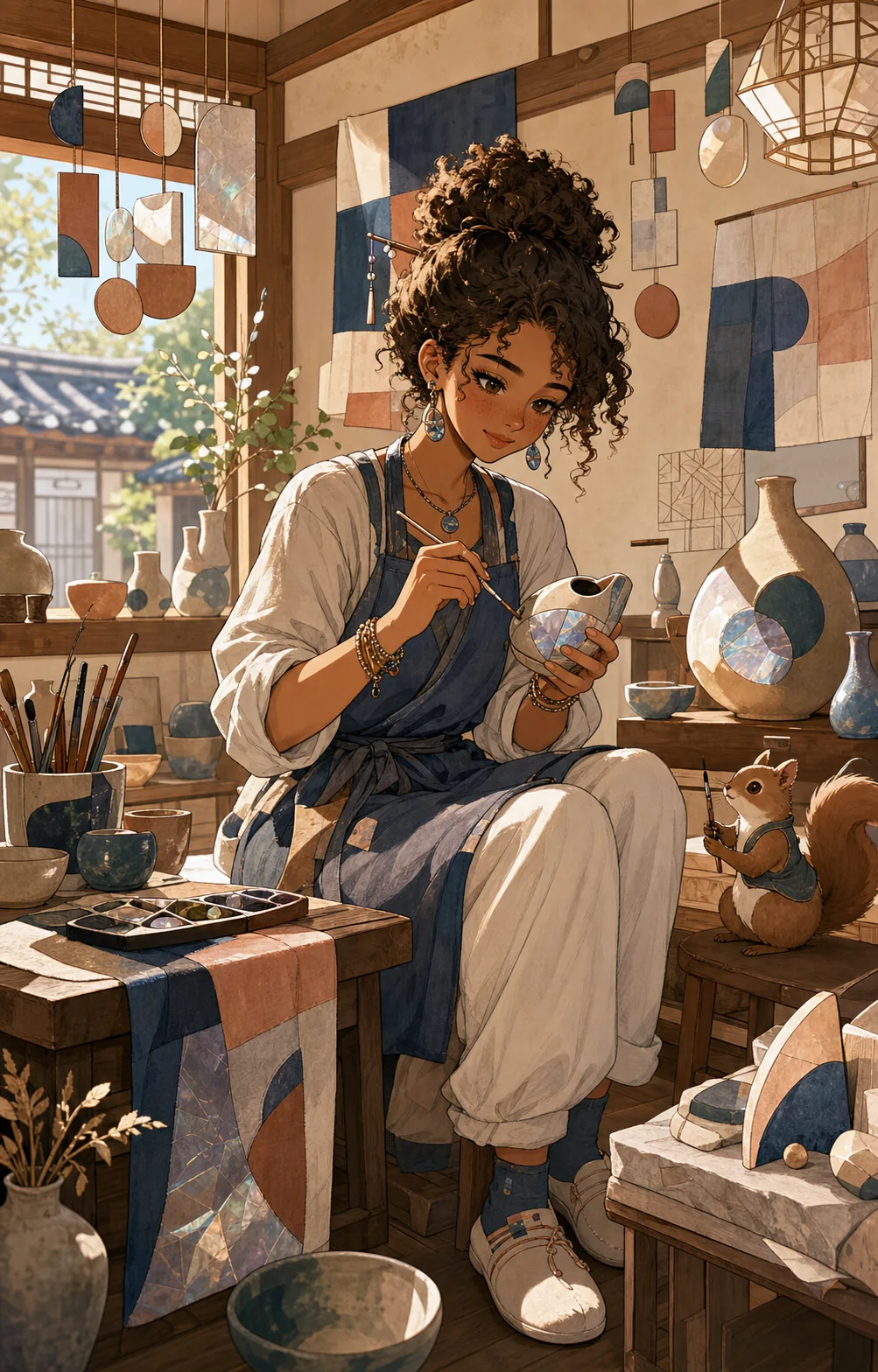
Jeonju Craft Culture Seeker
전주 공예문화 탐험가
You follow tiled roofs, artisan streets and handmade traditions through Jeonju.
Your travel lore
This is how you move through Korea.
You notice how places are made: timber gates, tiled roofs, stone walls, brick arches and the way a whole neighborhood holds them together. Gyeonggijeon Shrine anchors the route with royal portrait history and traditional architecture. Pungnammun adds monumental Joseon woodwork; Jeondong Catholic Cathedral creates a clear Byzantine and Romanesque contrast. Omokdae provides a traditional pavilion and elevated village context, while Jeonju Hanok Village connects the route through its large walkable collection of hanok, artisans, food and public culture. These stops offer visual and historical context rather than guaranteed workshops. Respect worship and heritage areas, follow posted access rules and treat living craft traditions as more than a backdrop. When a workshop is available, book through its current official channel and arrive ready to listen.
Five public places
Build your main-character day.

Jeonju Hanok Village
Gyeonggijeon Shrine
A royal portrait shrine, traditional architecture and stone walls anchor the culture walk.
Photo: Bernard Gagnon · CC0 1.0 · cropped for display

Wansan-gu, Jeonju
Pungnammun Gate
A monumental Joseon gate adds traditional woodwork and civic history to the route.
Photo: Minseong Kim (IMKSv) · CC BY-SA 4.0 · cropped for display

Jeonju Hanok Village
Jeondong Catholic Cathedral
Brick, Byzantine and Romanesque design create a strong architectural contrast.
Photo: Bernard Gagnon · CC0 1.0 · cropped for display

Jeonju Hanok Village ridge
Omokdae Historic Site
A traditional pavilion and elevated village context add a contemplative heritage stop.
Heads-up: The official English city feature lists Omokdae and Imokdae Historic Sites together.
Photo: Mobius6 · CC BY-SA 4.0 · cropped for display

Pungnam-dong / Gyo-dong, Jeonju
Jeonju Hanok Village
The walkable core connects hanok architecture, artisans, food and traditional public culture.
Two nearby moods
You might also be…